Performance Comparison of Long-Horizon FCS-MPC for IPMSM Considering THDi and Inverter Loss
- Abstract
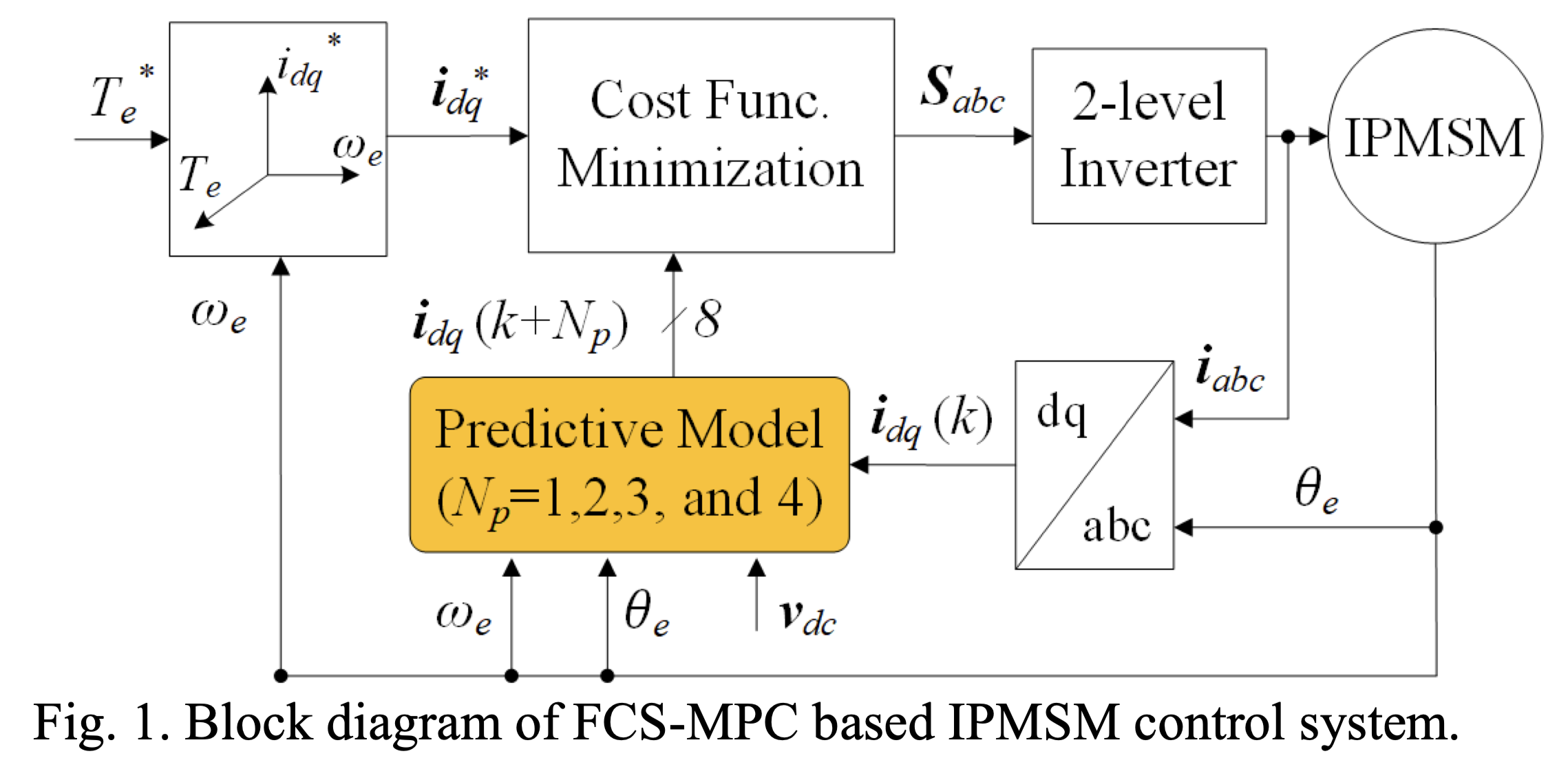
In this paper, the feasibility of achieving performance benefits in two control objectives is analyzed using long-horizon finite control set-model predictive control for an interior permanent magnet synchronous motor. Current reference tracking and minimization of inverter loss are used as control objectives in a cost function. At the fixed sampling period, simulation results show the trend that the current total harmonic distortion and inverter efficiency improve as the length of the prediction horizon increases. To derive results of considering the sampling period and weighting factor effects, Monte Carlos simulations were carried out. Considering the real-time implementation and the system performance, length of horizon and sampling period should be decided depending on the motor speed and torque with an appropriate weighting factor.